Bedding · Materials & fit
How Naturepedic Wooly Balances Loft, Breathability, and Bed Fit
A three-inch layer of wool can make a bed feel noticeably different without asking the mattress underneath to become something it is not. The Naturepedic Wooly brings organic wool batting and an organic cotton cover to that familiar task, offering softness, moisture management, and a little more presence on the bed. The practical questions are just as important as the appealing materials: how much loft will it add, will it fit the mattress and sheets, and what does care look like once it is in use?
Published October 24, 2026
A comfort layer, not a new mattress
A mattress topper is a useful piece of domestic engineering: a removable layer that can change the first impression of a bed while leaving its underlying structure in place. It may add cushioning to a surface that feels too firm, soften the contact at the shoulders and hips, or simply make a familiar mattress feel less austere. It does not, however, rebuild a mattress whose support has failed. A topper can influence the feel of a sleep surface; it cannot reliably correct a sagging or unsuitable foundation.
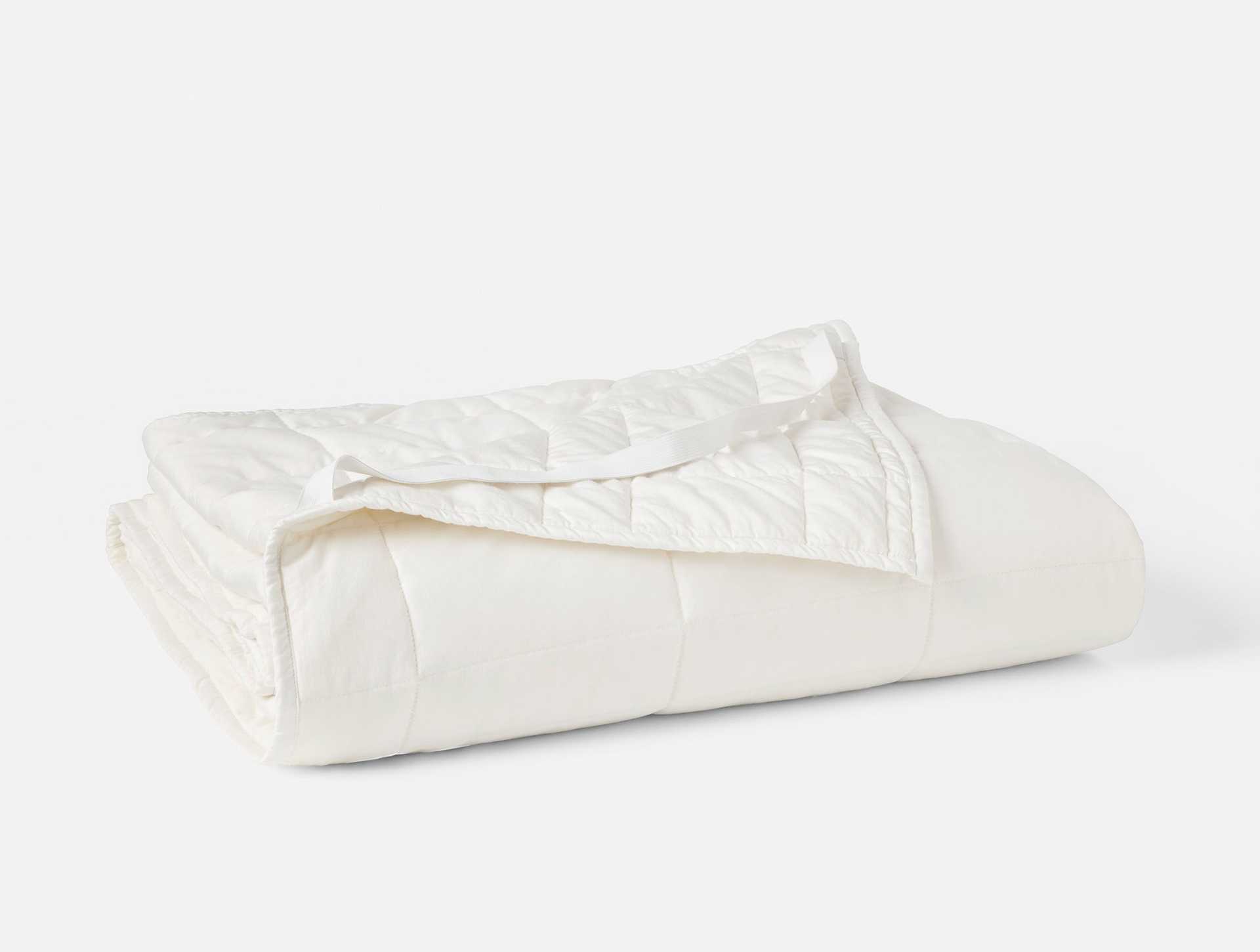
The Naturepedic Wooly is described as a three-inch topper filled with certified organic wool batting and finished in breathable organic cotton sateen. Its profile gives it more visual and tactile substance than a thin mattress pad. The distinction matters. A pad is generally a modest protective layer; a wool mattress layer of this depth is intended to contribute a perceptible amount of cushioning and loft.
“Loft” is the word often used for the height and fullness of a soft filling. It is not a promise that the bed will feel three inches softer in a simple, measurable way. The sensation depends on the topper’s construction, how the wool settles under weight, the mattress beneath it, and the sleeper’s body and preferences. A medium mattress may feel more yielding; a very firm one may feel less severe at the surface, but still retain much of its underlying firmness. The Wooly is best understood as an adjustment to the surface, not a dramatic alteration of the whole bed.
For a closer look at its listed materials and care information, see the Naturepedic Wooly Mattress Topper. As with any bedding purchase, confirm current specifications, dimensions, and availability with the seller before ordering.
What wool contributes to the bed
Wool has a reputation for warmth, which is deserved but incomplete. Its appeal in bedding is not simply that it traps heat. Wool fibers can take up moisture vapor and release it gradually, helping manage the small changes in humidity that occur around a sleeper over the course of a night. Combined with an open, breathable construction, that can contribute to a less clammy-feeling sleep surface. The effect is not the same as active temperature control, and it does not guarantee that every sleeper will feel cool. It is a material property, not a thermostat.
In the Wooly, organic wool batting supplies the loft and the cotton sateen cover forms the outer fabric. Together, they create a soft layer that can add a sense of cushioning while allowing air and moisture to move through the materials. Individual results will vary with the room, bedding, mattress, sleepwear, and personal comfort. A person who tends to sleep warm may appreciate the breathability of natural fibers, while another may find that any added layer makes the bed feel warmer.
Wool’s springy structure also gives it a different character from dense foam. It tends to feel like a fibrous, gently yielding layer rather than a surface that slowly embraces the body. That does not mean it will offer the same degree of contouring as a responsive latex or memory-foam topper. People seeking a pronounced cradle, or a very specific change in pressure relief, should consider the differences among materials and, where possible, test the feel before committing.
Organic material claims deserve a little precision. The product information identifies organic wool batting and an organic cotton sateen cover, and describes the wool as GOTS-certified. Certification can help buyers understand how particular materials and processing stages are assessed under a named standard. It does not, by itself, tell you whether the topper’s feel will suit you, how long it will last in your home, or whether every part of a finished product has the same certification. Read the current product documentation for the exact scope of any certification.
Three inches, with a few consequences
Three inches is enough height to deserve a check of the entire bed, not just the mattress. Once the topper is laid out, the fitted sheet must stretch over both layers and remain securely tucked beneath the mattress. A sheet that fits a mattress alone may be too shallow once the new loft is added. Measure the mattress depth, add the topper’s stated height, and compare the total with the sheet’s pocket depth. Because loft can compress under bedding and body weight, measurements are a guide rather than a guarantee of an exact finished height.
It is worth checking the mattress protector, too. If you use one, decide whether it will sit beneath the topper or cover both the topper and mattress. The arrangement affects how the layers stay together, how easily they can be removed for airing, and whether the protector’s dimensions are adequate. A protector designed for a mattress alone may not accommodate the combined depth.
There is also the question of how the bed looks and feels at its edges. A thick comfort layer can make a mattress appear taller, change the way a fitted sheet lies, and create a softer transition between the sleeping surface and the side of the bed. That may be welcome. It may also make a tight-fitting frame, a deep headboard recess, or a low bedside table feel newly inconvenient. The topper does not exist in isolation; it joins a small system of mattress, frame, sheets, blankets, and habits.
For anyone who likes the existing mattress but wants more surface softness, this can be a relatively direct intervention. For someone whose mattress is already plush, another three inches may feel excessive or make movement across the bed less easy. The useful question is not whether a topper is luxurious in the abstract, but what change you want it to make. “A little more cushioning” is a different brief from “a substantially softer bed.”
Fit begins with the measurements
Mattress labels are convenient; tape measures are more conclusive. Before selecting a size, measure the mattress’s width and length, especially if it is an older model, an unusual size, or part of a split configuration. Compare those figures with the topper’s current size chart. A small mismatch can leave an exposed strip at the edge, create overhang, or make it harder to keep the layers aligned.
Consider the mattress’s shape as well. Pillow tops, rounded corners, adjustable bases, and split mattresses can complicate what appears to be a simple rectangle. If the bed has an adjustable base, check the manufacturer’s guidance on using a loose topper and pay attention to whether the added layer shifts when the bed changes position. A topper that moves repeatedly may need a more secure bedding arrangement.
The Wooly product information describes a 3-inch profile and lists standard mattress sizes, including Twin, Twin XL, Full, Queen, King, and California King. These are useful starting points, not substitutes for verifying the selected size on the product page. Bedding dimensions can vary slightly among manufacturers, and the seller’s current specifications should take precedence over assumptions based on a familiar size name.
After placement, smooth the topper from the center toward the edges and check the corners. Then fit the sheet over the full stack and look for persistent pulling or exposed corners. A sheet that is under strain may pop off during the night; one that is excessively loose may bunch. If the sheet only barely fits, moving to a deeper-pocket version is usually more sensible than hoping the fabric will stretch indefinitely.
Care: keep the routine modest
The Wooly is listed as spot-clean only. That instruction should shape expectations from the start: this is not a topper to put through a washing machine when the whole surface needs refreshing. Wool-filled bedding can be difficult to wash at home, and excess water or rough handling may affect the filling, structure, or drying time. Follow the manufacturer’s current care directions rather than improvising a full wash.
A mattress protector is one of the more practical ways to reduce the likelihood of stains and spills reaching the topper. Use a protector compatible with the overall mattress depth, and check whether its placement interferes with the topper’s fit or comfort. For a small spot, use only the method and cleaning products recommended by the maker. Apply as little moisture as practical, avoid aggressive rubbing, and let the area dry completely before remaking the bed. When in doubt, consult the product’s care label or seller.
Regular turning and rotation are also recommended for the Wooly. Changing its orientation from time to time can help prevent one area from bearing the same pattern of pressure night after night. The product information advises turning and rotating it regularly, roughly two to four times a year. A reminder at the change of seasons is an easy way to make the task memorable without turning bedding maintenance into a hobby.
Because wool is a natural filling, it may compress and settle with use. That is not necessarily a defect; soft materials respond to weight. Periodic rotation can help distribute use, while gentle airing may help the bed feel fresher between routine changes of linens. Avoid exposing the topper to care methods not approved by the manufacturer, and do not assume that “natural” means maintenance-free. Natural fibers have strengths, but they still benefit from protection and appropriate handling.
A practical decision, rather than a materials contest
When comparing a wool topper with latex or foam, it helps to describe the desired feel before comparing product claims. Wool is often chosen for a soft, breathable, fibrous layer and moisture management. Latex generally has a more buoyant, resilient response. Foam may contour more closely, depending on its formulation and density. These are broad material tendencies, not guarantees: thickness, quilting, cover fabrics, and the mattress beneath all influence the finished feel.
For the Wooly, the strongest case is a sleeper who wants to add a substantial but natural-fiber comfort layer to a mattress that remains fundamentally supportive. Its organic wool and cotton construction, three-inch loft, and spot-clean-only care instructions are central considerations. If washable bedding is a priority, a product designed for machine washing may fit daily life better. If the goal is a very firm change in support or a tailored contour, another type of topper may be more suitable.
There is no universal rule that a wool layer will suit side sleepers, back sleepers, or any other group. A side sleeper may welcome extra cushioning at the shoulder and hip, but the result depends on the person’s build, mattress firmness, and preferred alignment. A back sleeper may like a softening layer without wanting to sink deeply. The best test is the interaction between the topper and the sleeper, not a category label.
Likewise, wool’s moisture-handling properties should not be mistaken for a medical treatment or a promise to prevent allergies. People with wool sensitivities, asthma, or other specific concerns should review the materials and seek advice from a qualified clinician where appropriate. “Hypoallergenic” is not a guarantee that no individual will react. The most reliable purchasing decision comes from reading complete product details and matching them to personal needs.
A note about beds for babies
Wool toppers also appear in crib bedding, but a crib product is not interchangeable with an adult mattress topper. Infants need a firm, flat, correctly fitted sleep surface and a clear sleep space. A soft, thick adult topper should not be used in a crib. If considering any additional product for an infant’s sleep environment, follow current safe-sleep guidance and the crib and mattress manufacturers’ instructions; do not infer suitability from a material or a “natural” label.
That distinction is worth stating because the words “wool topper” can describe products with very different dimensions, thicknesses, constructions, and intended uses. The Naturepedic Wooly discussed here is a three-inch mattress layer in adult bed sizes. It is not a crib accessory, and its comfort features should not be treated as infant-safety recommendations.
Before you order: a short checklist
- Confirm the mattress’s actual width, length, and depth, then verify the topper size on the current product page.
- Add the topper’s three-inch profile when checking fitted-sheet and protector pocket depth.
- Decide whether the mattress needs a modestly softer surface or a more substantial change in feel.
- Review the listed organic materials and the scope of any certification you wish to verify.
- Make sure spot-clean-only care is compatible with your household and use a suitable protector if appropriate.
- Check the seller’s current warranty, delivery, return, and product-care terms before purchase.
There is a pleasing simplicity to a layer placed on top of a bed: no renovation, no new frame, no need to explain to the mattress that it has been replaced. But simple objects often depend on a surprising number of small compatibilities. A few inches of loft affect sheets, protectors, room temperature, ease of care, and the way a familiar mattress greets the body.
The Naturepedic Wooly brings organic wool batting and organic cotton sateen together in a three-inch profile intended to add softness and breathable comfort. Its appeal lies in that combination, not in an extravagant promise. Measure the bed, account for the added height, protect the surface, and follow the care instructions. Then the topper can do what a good comfort layer should: change the conversation between sleeper and mattress, without pretending to be the whole bed.