Bedding · Mattress comfort layers
Royal-Pedic Wool Pillowtop Pads: How Thickness Changes the Feel of a Bed
A wool pillowtop pad can make a mattress feel more cushioned without changing the support built into it. Royal-Pedic’s Premier Natural pads come in four thicknesses, from two to five inches. The difference is not merely a matter of measurement: each height adds a distinct amount of loft, and the right one depends on what the mattress already feels like—and what you want it to feel like.
Published November 10, 2026
The layer between a mattress and a better night
There is a particular kind of domestic dissatisfaction that begins not with a bad bed, but with a nearly good one. The mattress is sound, perhaps even new; it supports the back and has no troublesome hollow. Yet the surface seems a little too stern at the shoulder, or too unyielding at the hip. Replacing the whole mattress may be an extravagant answer to a local complaint. A mattress topper offers a smaller intervention: a comfort layer placed on top of the mattress to alter the first impression of lying down.
A pillowtop pad does not ordinarily rebuild the mattress beneath it. The mattress’s springs, foam, or other support structure remain in place. What changes is the feel at the surface: the distance between the sleeper and that support, the softness under pressure, and the way the top layer responds to movement. The distinction matters. A topper may soften a firm-feeling bed, but it cannot reliably repair a sagging mattress or supply missing structural support. It is an adjustment, not a cure-all.
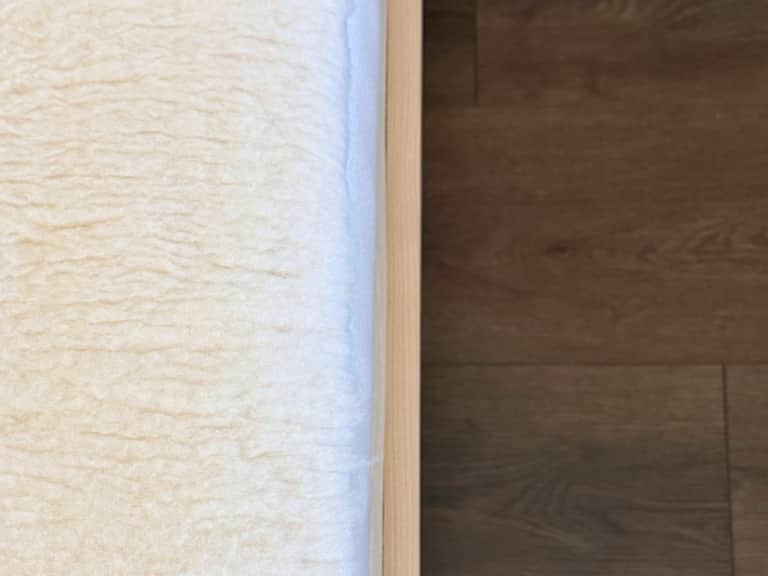
Royal-Pedic’s Premier Natural Pillowtop Pads are described in four thicknesses: two, three, four, and five inches. The listed descriptions identify French wool batting as the central filling, with cotton used in some versions as an outer wrap. The thicker models are presented as adding more cushioning and pressure-point relief; the thinner option is intended to add a softer surface while maintaining the mattress’s underlying firmness. Those descriptions give a useful starting point, though the sensation in any particular bedroom will depend on the mattress, the sleeper, and how the layers are assembled.
What an inch can—and cannot—tell you
Thickness is easy to compare because it is numerical. Comfort is less obedient. A five-inch pad sounds dramatically softer than a two-inch one, and it may create a more pronounced pillowtop effect, but the number alone cannot predict whether it will suit a particular sleeper. Fill, construction, mattress firmness, body weight, sleep position, and the fitted sheet all enter the equation. Height is a clue about loft, not a complete description of feel.
In general, a thinner pad makes a more modest change. It can take the edge off a firm surface while preserving more of the mattress’s original character. A thicker pad places more material between the body and the mattress, giving the surface a fuller, more cushioned profile. That can be welcome to someone seeking more plushness, particularly around pressure points, but it can also make the bed feel less like the mattress beneath it. The question is not simply which pad is softest. It is how much of the existing bed a sleeper wants to keep feeling.
The relationship is not perfectly linear. Adding an inch does not guarantee a fixed amount of extra softness, because the wool compresses under a person’s weight and the mattress below it contributes its own response. A firm mattress may continue to feel firm through a comfort layer, though less sharply so. A mattress already designed with a soft surface may become too yielding when topped with substantial loft. In both cases, a little experimentation in thought—starting with the least dramatic change that addresses the problem—can be more sensible than choosing the tallest option on the assumption that more is always better.
- Two inches: a relatively restrained way to add cushioning while retaining more of the mattress’s original feel.
- Three inches: a middle ground for sleepers who want a clearer softness adjustment without the most substantial profile.
- Four inches: a fuller layer for those seeking a more noticeable pillowtop sensation and additional cushioning.
- Five inches: the deepest listed option, intended for a pronounced layer of loft and a substantial change to the surface feel.
These descriptions are comparative, not guarantees. A useful decision begins with a diagnosis of the bed. Is it too firm everywhere, or only uncomfortable at the shoulder? Does the sleeper want a gentle softening, or a more enveloping surface? Is the mattress in good condition? If it has developed a dip, adding loft may disguise the unevenness briefly without resolving it. Toppers work best when they refine a mattress that still does its essential job.
Wool: a filling with a different temperament
Wool is not memory foam, and it should not be expected to behave like it. It compresses and cushions, but its character is more fibrous and resilient than the slow, close moulding associated with some foams. Royal-Pedic’s product descriptions emphasize wool’s temperature-regulating qualities and moisture wicking. Those are useful properties to consider when choosing bedding, especially for sleepers who dislike a surface that feels clammy or overly warm. They are not promises that every person will sleep at an ideal temperature: room conditions, sheets, blankets, and individual preferences remain part of the climate of the bed.
The wool filling also gives these pads their particular, traditional idea of comfort. Instead of trying to make the mattress disappear, a wool layer adds softness while retaining a sense of the bed beneath. Its response will change under body weight; the sleeper settles into the fibers, but the degree of settling is influenced by the pad’s thickness and the mattress’s firmness. In that way, the pad is less like a new mattress than a carefully chosen surface over the old one.
Natural materials can invite broad claims, so it is worth keeping the language precise. Wool is described in the supplied product information as moisture-wicking and, for some models, dust-mite resistant. Individual sensitivities and household conditions vary, however, and a natural filling is not automatically suitable for every allergy or care situation. Anyone with a known material sensitivity should check the product details and consider their own needs rather than relying on general assurances.
There is also a practical distinction between a comfort layer and a protective layer. A pillowtop pad adds cushioning; it is not necessarily a waterproof barrier or a substitute for a mattress protector. Because the wool pads described here are not designed for routine machine washing, a separate washable protector can help keep spills and everyday soil away from the topper and mattress. It is a small piece of planning that can make an otherwise lovely layer less nerve-racking to use.
Construction and placement: the details that shape everyday use
The four Premier Natural options do not all share identical construction details in their descriptions. The two-inch pad is listed with quilting on two sides and knife-edge construction. The three-inch option is described as having boxed-edge construction. The four-inch pad is also described with boxed edges and a wool batting wrapped in long-staple cotton. The five-inch version is identified as a thick, boxed-edge pad. These differences affect the pad’s outline and finishing, but the available descriptions do not provide a controlled comparison of how each construction performs over time. It is prudent to treat them as product details, not as proof that one is universally more durable or comfortable.
Placement is straightforward. The topper lies on the mattress; a mattress pad and fitted sheet go over both, according to the product information. That arrangement helps hold the layers together and gives the sleeper a familiar sheet surface. Before ordering, it is worth checking the dimensions of the mattress and the available size of the pad. A comfort layer should cover the mattress appropriately, and the combined height of mattress, topper, pad, and bedding can matter—particularly if fitted sheets already fit snugly.
The extra height can also change the everyday geometry of a bed. A deeper topper may make it more difficult to keep a fitted sheet securely in place if the sheet is not deep enough. It can alter the edge profile and the impression of getting into or out of bed. These are not dramatic engineering problems, but they are the sort of small domestic consequences that reveal themselves after delivery, when a person is standing beside a freshly made bed with one corner of a sheet still refusing to cooperate.
For shoppers comparing the thicknesses, the product pages provide distinct descriptions for the two-inch Royal-Pedic Premier Natural Pillowtop Pad, the three-inch pad, the four-inch pad, and the five-inch pad. Comparing the construction notes and confirming dimensions before purchase is more useful than relying on the height label alone.
Choosing a thickness by starting with the mattress
Imagine a firm mattress that feels supportive but leaves the shoulders complaining by morning. The natural impulse may be to add as much softness as possible. Yet the better question is whether the discomfort calls for a moderate surface adjustment or a substantial one. A thinner option may soften the first contact while letting the sleeper remain more connected to the mattress. A thicker pad may provide a more obvious plush layer, but it may also change the bed’s overall feel more than expected.
For a side sleeper, pressure at the shoulder and hip can make surface cushioning particularly noticeable. A fuller topper may be appealing if the mattress feels too hard at those points, but body weight and mattress response will influence how far the sleeper settles. Back and stomach sleepers may have different preferences: some want a softer surface, while others are wary of adding too much give. There is no universal thickness assigned to a sleeping position. The useful guide is the sleeper’s experience on the existing bed and the amount of change desired.
It helps to describe the problem in ordinary terms before comparing specifications. “The mattress is uncomfortable” is too broad to guide a purchase. “The surface feels harsh at my hip, but I like the support beneath it” is more revealing. So is: “I want the bed to feel noticeably plusher, and I am comfortable with a thicker layer.” The more precisely a sleeper can name the desired change, the less likely it is that a topper will be asked to solve the wrong problem.
Consider, too, whether the mattress is already soft. If it compresses easily or has a pillowtop of its own, a thick additional pad could create a surface that feels overly cushioned. If the mattress is merely firm but level and supportive, a topper may be a more plausible adjustment. If it is sagging, uneven, or worn out, a new comfort layer is unlikely to restore the structure underneath. A topper cannot persuade a failing mattress to become a different mattress any more than a new tablecloth can improve a table with a broken leg.
Couples have an additional complication: the same bed must serve two sets of preferences. One sleeper may want a deeper layer while the other prefers a firmer surface. A single full-bed topper applies the same general change across the mattress, so different preferences deserve careful discussion before selecting a thickness. Product sizing, compatibility, and return policies are worth confirming directly with the retailer; the product descriptions alone do not establish every purchasing or fit detail.
Care: wool is not a laundry-day shortcut
The care instructions for the Royal-Pedic Premier Natural pads call for spot cleaning rather than machine washing. That is an important consideration, not a footnote. A topper several inches thick is not like a pillowcase that can be tossed into the regular wash. The product information also describes wool as something that may be aired or sunned periodically. Regular airing can refresh bedding, but it should be done with attention to the manufacturer’s instructions and the conditions in the room; the supplied details do not specify a universal schedule.
For small marks, the safest approach is to follow the specific care guidance provided with the product and avoid saturating the wool. Excess moisture can make a thick filling difficult to dry thoroughly. Harsh cleaning methods may damage fibers or construction, and a topper that remains damp beneath the surface is not ready to be covered with sheets. When in doubt about a stain or a larger spill, consult the seller or manufacturer before applying a remedy borrowed from another bedding product.
Routine habits can help reduce the need for cleaning. Using an appropriate mattress pad or protector above the topper, airing the bedding when practical, and allowing the bed to dry before remaking it are all modest forms of prevention. The pad may also be turned or rotated occasionally if its construction and care instructions permit. The available descriptions vary, so do not assume that every model has identical handling requirements. Keep the care label or written instructions close at hand.
Wool can settle or compress with use, as many natural fills do. That does not by itself mean that the pad has failed, but even use and sensible care can help preserve a consistent feel. If a particular pad seems to be changing noticeably, consult its product guidance rather than trying to restore loft with an aggressive wash or an improvised treatment.
A practical comparison before deciding
It may help to think of the four heights as degrees of intervention. The two-inch model is the least substantial addition; it is the option to consider when the mattress needs softening but its original feel is still valued. Three inches gives more room for cushioning. Four inches moves toward a more pronounced pillowtop profile, while five inches is the most substantial choice in the listed range. None of these descriptions replaces the experience of sleeping on a particular combination of mattress and topper, but they offer a sensible framework for comparison.
Before choosing, note the mattress’s age and condition, its dimensions, and the way it feels in the position in which sleep actually happens—not merely when pressed by hand in a showroom. Think about heat, the weight of existing blankets, sheet depth, and how much loft feels comfortable. If the mattress is under warranty, check whether adding a topper affects any conditions; warranty terms vary and should be verified rather than guessed. The same care applies to certifications, exact material composition, and availability: refer to the current product listing for details that may differ by model or change over time.
One useful discipline is to imagine the morning after the change, not just the moment of lying down. A bed can feel gloriously soft for the first few minutes and less suitable after a full night if the sleeper’s body settles more than intended. Conversely, a modest layer may seem understated at first yet provide exactly the reduction in surface pressure that was missing. The best thickness is not the one that sounds most luxurious. It is the one that makes the mattress more comfortable without creating a new problem.
Frequently asked questions
Will a thicker wool pillowtop pad make a mattress softer?
It will generally add more loft and cushioning than a thinner option, but the result depends on the mattress beneath it and the sleeper’s body and preferences. Thickness does not alter the mattress’s underlying support system, and it cannot correct sagging or structural wear.
Does wool make a bed sleep cool?
The product descriptions highlight wool’s ability to regulate temperature and wick moisture. Those qualities may help create a more balanced sleep surface, but comfort is individual and also depends on bedding, room temperature, and the sleeper.
Can these pads be machine washed?
The listed Royal-Pedic Premier Natural pad descriptions advise spot cleaning, rather than routine machine washing. Check the current care information for the exact model before cleaning it.
Should a topper go under or over the mattress pad?
The product information describes placing the topper directly on the mattress, then putting the mattress pad and fitted sheet over the topper. This arrangement can help hold the layers in place, but confirm that the sheets can accommodate the combined depth.
The measure of a good layer
A mattress topper is an unusually intimate purchase for an object that arrives folded into a box. Its success is measured not by how impressive it sounds in a specification list, but by the small disappearance of a nightly annoyance: the shoulder no longer presses so sharply; the bed feels softer without losing the support that made it worth keeping. Royal-Pedic’s wool pillowtop pads offer a straightforward set of choices, from two inches of cushioning to five. The decision is a matter of proportion—how much loft to add, how much of the mattress to preserve, and what kind of surface makes a sleeper feel at ease.
Begin with the mattress as it is, rather than the bed one hopes to conjure. Identify the discomfort, choose the degree of change accordingly, and pay attention to construction, fit, and care as well as height. Wool brings its own breathable, moisture-managing character to the arrangement; the thickness determines how prominently that layer enters the experience. In a bedroom, as in many other places, the right improvement is often not the largest one. It is the one that makes the existing thing work better.