Bedding · Materials guide
Healthy Choice Wool or Latex: Which Topper Suits Your Sleep Preferences?
A mattress can be perfectly serviceable and still feel like a diplomatic failure: too firm at the shoulder, too warm by midnight, too unyielding in the morning. A topper offers a way to renegotiate. Healthy Choice’s wool and latex options approach that negotiation differently. One brings a deep, breathable layer of wool batting; the other, a compact core of Dunlop latex. The better choice depends less on which material sounds more virtuous than on what you want your bed to do.
Published November 27, 2026
The short answer
The Healthy Choice organic wool topper is approximately three inches thick, with wool batting enclosed between organic cotton layers. Its principal appeal is a cushioned, breathable surface that can help manage warmth and moisture. The Healthy Choice organic latex topper has a two-inch Dunlop latex core beneath an organic cotton cover. It is the more compact, responsive option: a layer intended to soften the contact with a mattress while retaining a buoyant, supportive feel.
Choose wool if you prize a lofty surface, natural temperature regulation, and a gentler, less springy kind of cushioning. Consider latex if you want a more resilient layer that responds as you move and prefer not to add as much height. Neither material can repair a sagging or structurally exhausted mattress, and neither guarantees a particular night’s sleep. A topper changes the surface; it does not rewrite the mattress beneath it.
The practical distinction is also important: the wool option is described as spot-clean only, while the latex topper should not be washed and calls for careful spot cleaning followed by air drying. Both reward a little forethought, particularly the habit of using a mattress protector.
Two materials, two kinds of comfort
“Comfort” is an imprecise word, rather like “nice,” or “a good mattress.” On a bed, it may mean the first soft impression when you lie down. It may mean less pressure at the hips and shoulders, a surface that does not feel clammy, or support that remains steady when you turn over. Wool and latex can contribute to several of these qualities, but they do so by different routes.
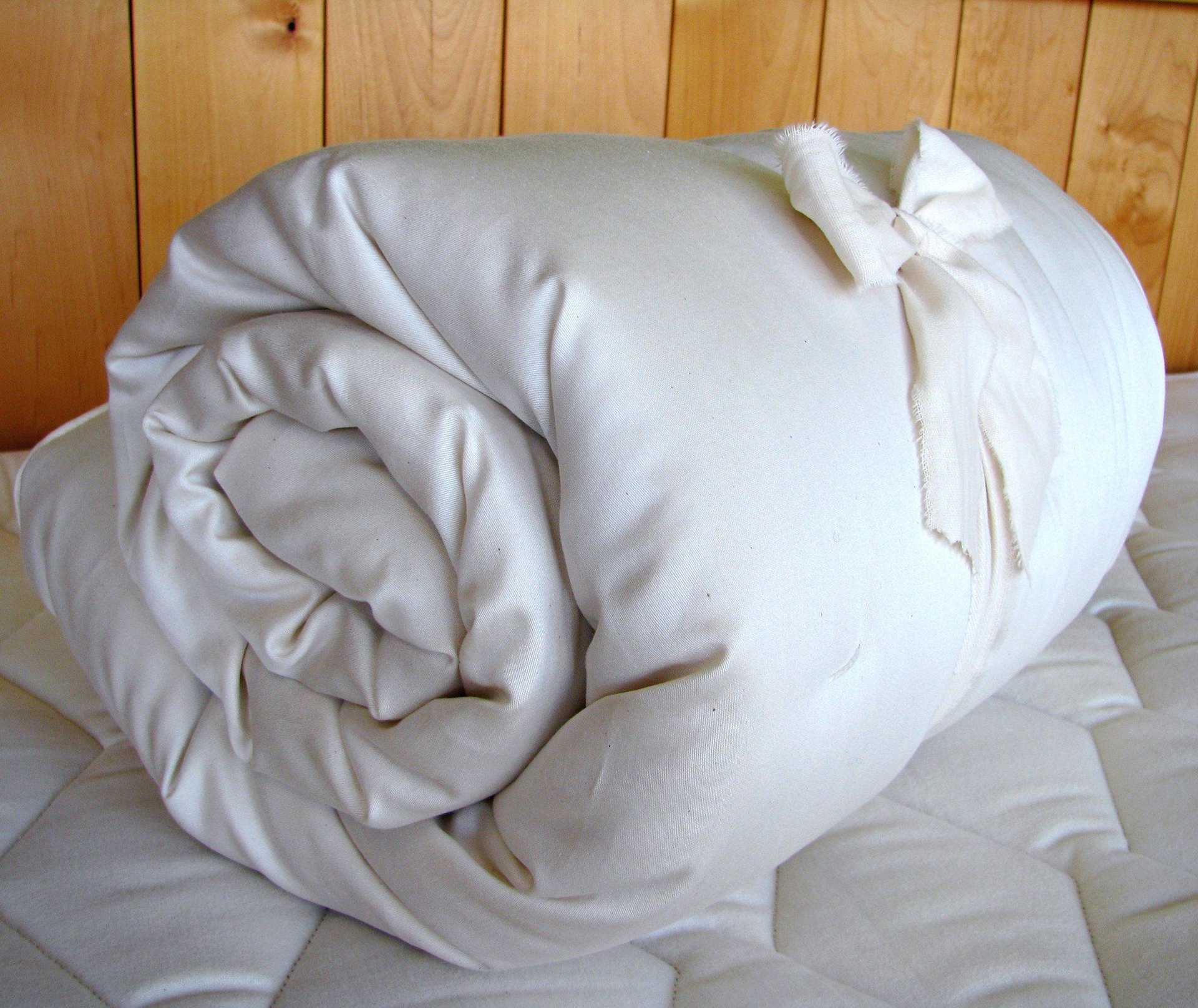
Wool is a fiber fill, not a solid slab. In the Healthy Choice wool topper, the batting is contained between organic cotton layers, in a construction about three inches thick. That loft can lend a mattress a more cushioned, padded character. Wool is also known for helping manage moisture and temperature: it can absorb water vapor and release it, and its insulating quality may feel agreeable across changing conditions. Those properties are not a thermostat, and the experience depends on the whole bed—sheets, duvet, room temperature, mattress and sleeper included.
Latex behaves differently under weight. The Healthy Choice latex model uses a two-inch Dunlop latex core under an organic cotton cover. Latex tends to compress and rebound rather than remain indented in the way some softer foams can. That responsiveness can make it easier to shift positions, while its cushioning may ease the direct pressure of a firm mattress. It is still a relatively thin layer: it can alter the surface feel, but should not be expected to transform a mattress with deep dips or a pronounced structural problem.
The difference is not simply “soft wool” versus “firm latex.” Thickness, density, quilting, the mattress below, body weight, sleep position and personal preference all affect how a topper feels. A three-inch wool layer may feel more substantial because of its loft; a two-inch latex core may feel more direct and springy. Those are useful starting points, not universal laws.
What the specifications tell you
| Feature | Healthy Choice wool topper | Healthy Choice latex topper |
|---|---|---|
| Construction | Wool batting between organic cotton layers | Two-inch Dunlop latex core with an organic cotton cover |
| Approximate profile | About three inches | Two inches |
| Likely character | Lofty, cushioned, breathable | Responsive, buoyant, more compact |
| Care described | Spot-clean only | Do not wash; spot-clean sparingly and air-dry |
| Certifications described | GOTS-certified wool and cotton | GOLS-certified latex and GOTS-certified cotton cover |
Certifications offer information about standards and supply chains; they do not measure whether a person will find a topper comfortable. GOTS and GOLS refer to different certification systems and materials. The product descriptions identify the wool and cotton as GOTS-certified in the wool option, and the latex core as GOLS-certified with a GOTS-certified cotton cover in the latex option. Anyone for whom a particular standard is essential should confirm the current product documentation and the scope of the certification before buying.
The case for wool
Wool may suit someone who wants the bed to feel more yielding without seeking a distinctly springy response. Its batting creates a soft buffer between sleeper and mattress, and the roughly three-inch construction gives it a fuller profile than the latex option. If a firm mattress feels severe at the surface, that extra loft may be welcome. Side sleepers, who often notice pressure at the shoulder and hip, may appreciate the added cushioning, though a topper cannot ensure that a particular mattress will align with every body.
The material’s moisture-management reputation is part of its appeal. A bed is a small climate system: the sleeper gives off heat and moisture; bedding holds or releases them; the room participates, whether invited or not. Wool’s breathable, moisture-managing qualities can help make that environment feel more balanced. “Can help” matters here. It is not a guarantee that a hot sleeper will sleep cool, especially under heavy covers or in a warm room.
Wool also has a less mechanical feel than latex. It does not advertise itself through bounce. The effect is more like a layer of padding that takes the edge off the mattress, with a gently insulating character. For a sleeper who finds springy surfaces distracting, that distinction may be decisive. For someone who wants a crisp, buoyant response when turning over, it may be less appealing.
There is a cost to the woolly proposition, and it is domestic rather than philosophical. The Healthy Choice wool topper is described as spot-clean only. It cannot simply be placed in the washing machine when an accident or spill occurs. A protector is sensible; prompt attention to stains is sensible; a plan for drying and airing the bed is sensible. If easy laundering is a central requirement, the care label deserves more attention than the product’s pastoral associations.
The case for latex
Latex is the more responsive choice. Press down and it compresses; release it and it tends to spring back. That quality can make the surface feel supportive and lively, especially to people who dislike the slower, more enveloping sensation associated with some foams. A two-inch core adds cushioning without the fuller height of the wool model, which may be useful if fitted sheets already sit close to the mattress corners or if a substantial change in bed height is unwelcome.
Dunlop latex is the construction specified for the Healthy Choice topper. The core is two inches thick, and an organic cotton cover encloses it. The description positions it as a conforming layer, but it is prudent to interpret “conforming” as a broad material quality rather than a promise that the topper will suit every shape, sleeping position or mattress firmness. Latex can provide pressure relief while preserving a more buoyant feel; the balance varies from sleeper to sleeper.
For people who change position during the night, resilience may be a practical advantage. A surface that rebounds can feel easier to move across than one that settles into a deep, slow cradle. That is a preference, not a medical claim. Anyone with persistent pain or a specific clinical concern should treat bedding as one part of a larger conversation, not as a substitute for professional advice.
The latex topper has its own care limitations. It should not be washed. For a small spot, the product guidance calls for a little mild soap and very little water, followed by air drying. Avoid soaking the core, and do not put it in direct sunlight or near a direct heat source. Because the layer is not made for routine laundering, a protector helps keep ordinary spills, perspiration and dust from reaching the topper in the first place.
Match the topper to the way you sleep
If you sleep on your side
Side sleepers often pay close attention to pressure at the shoulder and hip. Both wool and latex can add cushioning, but they distribute that cushioning differently. The loft of wool may feel plush and forgiving; latex may offer a more defined, resilient contour. If the mattress is exceptionally firm, the question is not only which topper feels softer in a showroom, but whether the additional layer lets the shoulder and hip settle comfortably without making the rest of the body feel unsupported.
If you sleep on your back
Back sleepers may prefer a surface that cushions without allowing the pelvis to feel as though it is sinking too far. Latex’s rebound may appeal to those who want a more buoyant feel. A wool topper can also soften a firm mattress, but its roughly three-inch loft makes it especially important to consider how the entire sleep surface responds. Neither material has a guaranteed effect on spinal alignment; that depends on the sleeper and the mattress beneath it.
If you sleep on your stomach
Stomach sleepers commonly need to be cautious about adding too much softness or height, since a deeply cushioned surface may not feel supportive to every person in that position. The two-inch latex topper is the lower-profile option here, though it still changes the mattress’s feel. Wool’s greater thickness may be appealing to some and excessive to others. If you already wake feeling that your middle sinks too far, a topper is unlikely to solve the underlying issue.
If you sleep hot or wake damp
Wool is an obvious material to investigate for breathability and moisture management, while latex is often chosen for its responsive structure and open, resilient feel. Neither description should be mistaken for a controlled temperature guarantee. Mattress protectors, sheets, quilts, room ventilation and the mattress itself all influence the result. If heat is the problem, look at the full bedding arrangement rather than expecting one layer to conduct the entire orchestra.
Questions to ask before choosing
- What is wrong with the current mattress? A topper can adjust surface comfort; it cannot reliably correct sagging, broken support or a mattress that has reached the end of its useful life.
- How much height do you want to add? The wool option is about three inches thick; the latex core is two inches. Check fitted-sheet depth, bed height and any surrounding frame or headboard constraints.
- Do you prefer loft or rebound? Wool leans toward a padded, insulating surface; latex toward resilient, buoyant cushioning. These are tendencies, not precise forecasts of feel.
- How much care are you willing to do? Both products call for restraint with water. The wool topper is spot-clean only, and the latex core should not be washed. A protector can reduce the likelihood that cleaning becomes urgent.
- Do the certifications meet your needs? Read the product’s current certification information and verify which materials and facilities are covered. A material claim and a certification claim are not interchangeable.
If possible, test a comparable material before committing. A short trial in a showroom will not reproduce a full night, but it can reveal whether you dislike the spring of latex or the more padded feel of wool. Also check the current return policy, warranty, dimensions and care instructions. These details are product-specific and may change; they should be confirmed at the point of purchase rather than inferred from a general description.
Care that protects the investment
The easiest cleaning is often the cleaning that never becomes necessary. A well-fitted mattress protector can shield the topper from spills and everyday moisture, provided the protector itself does not make the bed feel too warm or alter the surface in a way you dislike. Keep bedding dry before making the bed, and follow the manufacturer’s instructions rather than applying a household remedy simply because it worked on a different material.
For the wool topper, stick to spot cleaning as described. Avoid treating “natural fiber” as a synonym for washable: wool batting enclosed in a constructed topper is not the same as a wool sweater. For the latex topper, do not machine wash or soak it. Use minimal moisture on a small stain, then allow the area to dry fully before replacing bedding. Heat and direct sun can be damaging, so air-drying in a suitable place is the safer approach.
Regularly airing bedding and rotating or repositioning a topper, where its care guidance permits, may help keep the sleep surface fresh and evenly used. Follow the specific instructions supplied with the product. The goal is not to turn a topper into a project; it is to give a material that cannot be casually laundered a reasonable chance of staying clean.
So, wool or latex?
The Healthy Choice wool topper is the more natural fit for someone seeking a lofty layer, a softly cushioned sensation and wool’s familiar capacity to manage moisture and temperature. It offers the fuller profile, at about three inches, and asks for careful, spot-only cleaning. It may be the better match when the complaint is that a mattress feels hard at the surface and the desired change is a more padded bed.
The Healthy Choice latex topper is the more promising option for someone who wants responsive cushioning in a more compact profile. Its two-inch Dunlop core can add a buoyant layer without the same loft, and the latex-and-cotton construction is described with GOLS and GOTS certifications respectively. It, too, is not washable, and spot cleaning must be gentle.
In the end, the best mattress topper is not the one with the most persuasive material story. It is the one whose feel suits your body, whose dimensions work with your bed, and whose maintenance you will realistically follow. Wool offers a soft, breathable buffer; latex offers a springier, more direct response. One is a little like adding a quiet layer of insulation. The other is more like tuning the surface so it answers back. Either can make a mattress more agreeable. Neither can make the decision for you.
At a glance
- Choose wool if: you want a fuller, softly cushioned layer and value wool’s breathable, moisture-managing character.
- Choose latex if: you prefer resilient, buoyant support and want a thinner profile than the wool option provides.
- Plan for care: neither topper is a routine machine-wash item; use a protector and follow the product-specific spot-cleaning instructions.
- Keep expectations grounded: toppers change the comfort layer, not the structure of a mattress that is sagging or failing.